
The Interesting Link Between BPC-157 and Gut Health
This finally piqued my interest in peptides

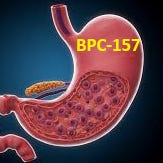
I really had no active interest in peptides (as something helpful) until about 2 months ago.
One of my chiropractic patients reported during his visit that his left shoulder problem (which he had been actively rehabilitating for about a year) had essentially resolved after taking BPC-157 for 3 weeks in sublingual spray form. He told me he was taking this one from Infiniwell.
I was impressed. While active, this man generally doesn’t take supplements, doesn’t lift weights, and rides motocross every weekend- which is a pretty big stress on his shoulders.
I’m generally skeptical of the ‘hot new peptide’, particularly because most of my patients taking the GLP-1 peptide feel and look sick; I’ve seen it’s immediate side effects on energy level and joint pain, and while people are certainly happy to lose weight, the long term side effects on metabolism and overall health are, at this point, generally unknown.
As I started to research BPC-157 (“Body Protective Compound”-157), I found a substantial amount of evidence for it’s effectiveness (reviewed in this paper, published by the American Academy of Orthopedics in January 2026), and an interesting BPC-157 link to gut health, which is my passion.
It turns out that the BCP-157 mimics a naturally occurring peptide in “gastric juice”.
We make BPC-157 naturally in the gut, just like GLP-1. When the gut is sick, we don’t make enough of either peptide.
Here’s a snapshot of BPC-157
The “BPC” in BPC-157 stands for “Body Protective Compound”. It’s synthetic, and mimics a compound first isolated in 1991 by scientists in Croatia who studied it’s ability to protect cells from damage.
BPC-157 is unusually stable for a peptide because the high proline content protects it from enzymatic degradation in the digestive system.
Research so far indicates that it has healing and regenerative effects because it stimulates blood vessel growth allowing damaged tissues to heal faster.
It affects nitric oxide signaling, which affects dilation of the blood vessels and blood delivery to healing tissue.
It also seems to promote improved healing and remodeling of connective tissue, such as tendons and ligaments. (Interesting for me as a chiropractor.)
There are no long term studies on the side effects in humans, and there are no toxic effects demonstrated in animal studies thus far.
The possible side effects are related to the fact that BPC-157 stimulates blood vessel growth; this means that in addition to healing joints and other tissues, it COULD also stimulate cancer growth.
